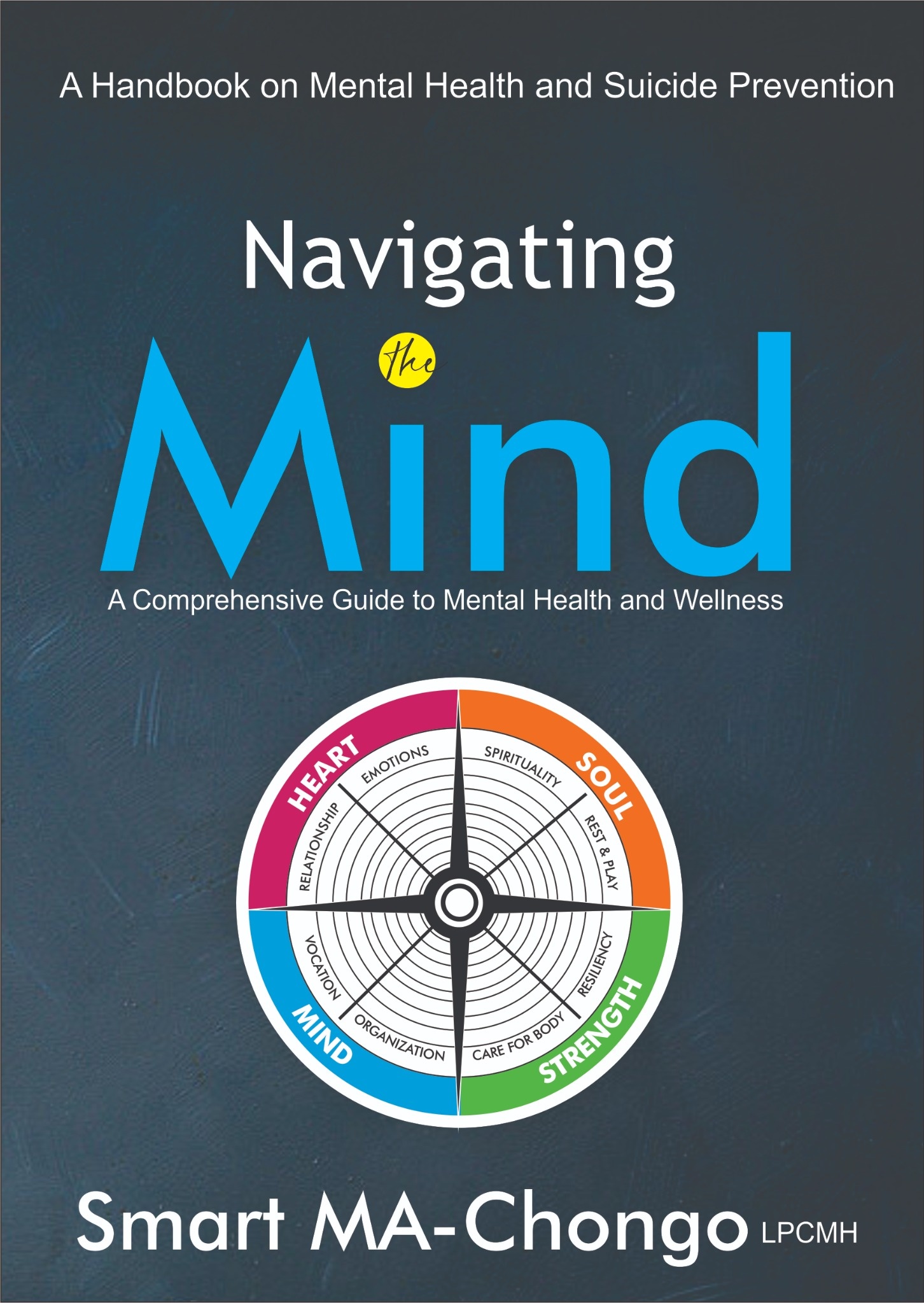
Buy Navigating the mind by: Dr. Smart MA-Chongo
For many Nigerians, there is still something uncomfortable about paying for counselling or psychotherapy.
We will gladly pay a doctor for a consultation. We will pay for laboratory tests, purchase prescribed medication, hire a lawyer to represent us, engage an accountant to manage our finances, pay a mechanic to repair our vehicle, and call a plumber when a pipe is leaking.
But when the problem involves our mind, emotions, relationships, trauma or psychological wellbeing, a different question often emerges:
“Why should I pay someone just to talk to me?”
That question reveals one of the most important challenges facing mental healthcare in Nigeria
Our problem is not only that we have too few mental-health professionals. We also have a cultural misunderstanding of the value of psychological care.
Nigeria needs counsellors, psychotherapists, psychologists, psychiatrists and other mental-health professionals more than ever. But as we increase the number of professionals providing these services, we must also change the way society understands and values their work.
The narrative must change.
WE DON'T ONLY SEEK COUNSELLING WHEN WE ARE “MAD”
One of the most damaging misconceptions about counselling and psychotherapy is the belief that they are only for people experiencing severe mental illness.
They are not.
People seek professional psychological support for many reasons: grief, marital conflict, parenting challenges, anxiety, depression, trauma, addiction, anger, stress, burnout, low self-esteem, relationship difficulties, career uncertainty, major life transitions and countless other challenges.
Sometimes a person does not need medication.
Sometimes what they need is a professionally trained person who can help them understand what they are experiencing, identify unhealthy patterns, develop healthier coping mechanisms and make better decisions.
Mental health is not simply the absence of mental illness. It is also about psychological wellbeing and the ability to cope with life's challenges, function effectively and contribute meaningfully to society.
Therefore, counselling and psychotherapy should not be viewed as luxury services reserved for people who are severely ill.
Psychological care is healthcare.
NIGERIA HAS A HUGE NEED FOR MENTAL-HEALTH PROFESSIONALS
The need is enormous.
Nigeria continues to face significant gaps in mental-health services, while stigma, limited resources and inadequate access continue to prevent many people from receiving appropriate care.
We need mental-health professionals in:
- Schools
- Churches and faith communities
- Hospitals
- Workplaces
- Universities
- Prisons
- Communities
- Humanitarian settings
- Rehabilitation centres
- Family-service centres
- Primary healthcare facilities
- Private practices
And we need these professionals to be properly trained, supervised, ethically grounded and professionally respected.
The solution to Nigeria's mental-health crisis cannot be built on goodwill alone. It requires a sustainable professional system.
BUT WHY SHOULD THEIR SERVICES BE FREE?
This is where we need an honest and balanced conversation.
There is a strong argument for free or subsidised mental-health services, especially for vulnerable and low-income populations.
Government should invest more heavily in mental healthcare.
Health insurance should cover appropriate psychological services.
NGOs and charitable organisations should support people who cannot afford care.
Faith communities can establish mental-health support funds.
Employers can provide employee assistance programmes.
Communities can develop accessible psychosocial-support programmes.
These are necessary conversations.
But affordable access is not the same as demanding that every mental-health professional work for free.
A counsellor or psychotherapist has invested years in education, professional training, skills development, supervision and experience.
Professional therapy is not simply sitting across from somebody and listening.
It involves assessment, case conceptualisation, therapeutic techniques, treatment planning, risk assessment, ethical responsibilities, confidentiality, documentation, continuing professional development, supervision and accountability.
There is a fundamental difference between saying:
“Mental healthcare should be accessible to everyone.”
and saying:
"Mental-health professionals should provide their professional labour for free.”
The first is a legitimate social responsibility.
The second is not a sustainable healthcare model.
WHY DO WE VALUE PHYSICAL HEALTH MORE THAN MENTAL HEALTH?
Consider this:
Imagine telling a dentist:
“I don't think I should pay you. You're only looking inside my mouth.”
Or telling a lawyer:
"You're only talking on my behalf.”
Or telling a mechanic:
“You're only tightening a few things.”
We understand that expertise has value.
But when that expertise concerns the human mind, emotions and behaviour, we sometimes reduce the entire profession to:
“Let's just talk.”
That mindset must change.
Talking is not the therapy.
The professional knowledge, training and therapeutic skill behind that conversation are part of the service.
A trained therapist knows how to listen for patterns, assess psychological risk, identify dysfunctional thinking and behaviour, establish therapeutic goals, maintain professional boundaries and apply appropriate therapeutic interventions.
The conversation may look simple.
The expertise behind it is not.
“BUT PEOPLE ARE POOR”
This is perhaps the strongest argument for making mental-health services more accessible.
Nigeria is experiencing serious economic pressure. Many individuals and families genuinely cannot afford private counselling or psychotherapy.
We must never shame people because they cannot afford professional care.
But the answer cannot be to make professional mental-health workers permanently unpaid.
Instead, we need multiple pathways to access.
Government can subsidise mental-health services.
Health insurance can cover counselling and psychotherapy.
NGOs can sponsor therapy sessions.
Faith communities can establish mental-health funds.
Employers can provide Employee Assistance Programmes.
Schools can provide counselling services.
Universities can establish student mental-health programmes.
Professionals can offer sliding-scale fees where possible.
Charitable organisations can sponsor vulnerable clients.
Community programmes can provide basic psychosocial support while ensuring that people with more complex needs are appropriately referred.
This is how we move from an argument about free services to a conversation about accessible services.
And for those who can afford professional care, paying for therapy should not be viewed as paying somebody “just to listen.”
You are investing in your psychological health.
WE MUST STOP ROMANTICISING FREE PROFESSIONAL SERVICES
There is a dangerous assumption in our society that if someone truly cares about people, they should work for free.
But we do not apply this principle consistently.
We don't tell a doctor:
"If you really care about humanity, don't charge.”
We don't tell an architect:
“If you love people, design the building for free.”
We don't tell an engineer:
“If you want to help Nigeria, forget your professional fees.”
We don't tell a pharmacist:
“People are suffering, so you should give your professional services away.”
Yet somehow, the counsellor and psychotherapist are sometimes expected to survive on compassion.
Compassion is not a salary.
A professional can genuinely care about people and still charge a professional fee.
In fact, if we want to build a strong mental-health system in Nigeria, we must create an environment where qualified professionals can make a sustainable living while serving the public.
Otherwise, we risk losing skilled professionals to other sectors, other countries or entirely different careers.
THE BETTER QUESTION IS: HOW DO WE MAKE THERAPY AFFORDABLE?
Perhaps we are asking the wrong question.
Instead of asking:
“Why should I pay a counsellor?”
we should be asking:
“How can we make quality counselling and psychotherapy accessible to Nigerians at different income levels?”
That question changes everything.
We move:
From entitlement to systems.
From suspicion to investment.
From stigma to prevention.
From charity alone to sustainable healthcare.
The goal should not be to force professionals to work without pay.
The goal should be to create a system in which people who need help can actually access it.
MENTAL HEALTH IS AN INVESTMENT, NOT AN EXPENSE
Untreated psychological problems rarely remain isolated.
They can affect marriages, parenting, education, employment, productivity, physical health, substance use and social relationships.
The consequences therefore extend beyond the individual.
When we help someone recover from trauma, we may be helping an entire family.
When we help a young person overcome addiction, we may be protecting a future.
When we help a couple communicate better, we may be protecting children from the consequences of unresolved marital conflict.
When we help an employee manage burnout, we may be protecting both the individual and workplace productivity.
When we intervene early in psychological distress, we may prevent a difficult situation from becoming a crisis.
Mental-health care is therefore not simply about treating illness.
It is also about prevention, resilience, functioning and human potential.
THE NARRATIVE MUST CHANGE
We need to stop saying:
“Counselling is for mad people.”
Instead, we should say:
“Counselling is part of responsible self-care.”
We need to stop saying:
“Why should I pay someone just to listen?”
Instead, we should ask:
“What professional support do I need to become healthier and function better?”
We need to stop expecting every mental-health professional to work for free.
Instead, we should ask:
“How can government, insurance providers, NGOs, churches, employers, communities and professionals work together to make mental healthcare affordable?”
And we need to stop treating mental health as an afterthought.
Nigeria cannot build healthy families, productive workplaces, resilient communities and a healthy nation while neglecting the psychological wellbeing of its people.
We need more counsellors.
We need more psychotherapists.
We need more psychologists and psychiatrists.
We need more mental-health programmes.
We need more affordable services.
And we need a society that respects and values the professionals providing them.
Free mental-health care has its place.
But professional mental-health care cannot depend entirely on professionals working for free.
The goal should not be to make professionals poor in order to make services accessible.
The goal should be to build a healthcare system where nobody is denied care simply because they are poor, while qualified professionals are still able to earn a sustainable living from the work they have been trained to do.
That is the narrative that must change.
Mental health is healthcare.
Counselling is professional care.
Therapy is not “just talking.”
And professional care deserves to be valued.